
Harm (verb): inflicting of pain, loss or suffering; causing physical or mental damage.
A very popular scripture verse written in graduation cards, recited in sermons, painted on wall plaques, and quoted by many Christians:
“For I know the plans I have for you,” declares the Lord, “plans to prosper you and not to harm you, plans to give you hope and a future.” Jeremiah 29:11
I’ve always focused on the part about “plans to prosper” because I really like that word “prosper” (on my list to write about some day!). Until recently – the word “harm” caught my eye.
Harm. Hurt. Injure. Wound.
Quite reassuring that God does not plan to harm me! But this got me thinking about the meaning of harm and digging into my Bible for other references to this word.
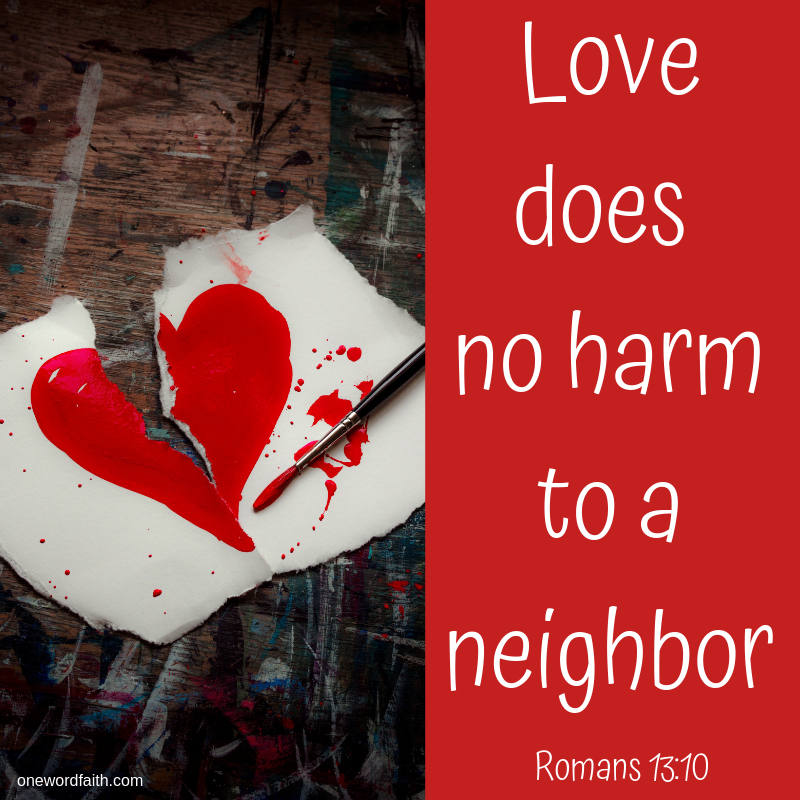
Love does no harm to a neighbor. Therefore love is the fulfillment of the law. Romans 13:10
This passage from Romans implies somewhat that “harm” and “love” are not compatible. Mutually exclusive even. If I am to follow the commandment to “love my neighbor”, that means doing no harm. To become more loving, I need to ask myself:
How do I harm, or have I harmed, others?
One of the most-used methods of inflicting harm is through words. Words have the capacity for blessing and for wounding.
The words of the reckless pierce like swords, but the tongue of the wise brings healing. Proverbs 12:18
Society loves quick-witted retorts and sarcasm, but God says differently:
Be quick to listen, slow to speak, slow to become angry. James 1:19
Let no evil talk come out of your mouths, but only such as is good for edifying, as fits the occasion, that it may impart grace to those who hear. Ephesians 4:29
When I speak critically or carelessly, I harm others as well as myself. I need only ask the Holy Spirit for help… to pray before speaking (simply a “help me” will suffice), and then give up control of my tongue to the Spirit’s direction and God’s will.
The underlying cause of my harm to others tends to be rooted in selfishness, dishonesty, or fear. As I regularly self-examine and identify harms I’ve inflicted, ask God for forgiveness, offer apologies to the ones I harmed, the less likely I am to inflict that same harm in the future.
A challenging part of the Harm puzzle is that it is a subjective term. What harms me isn’t necessarily what harms someone else.
I need to respect other people’s perspective of harm because of its subjectiveness. If someone claims I have harmed him or her, this is not debatable. They feel harmed, so thus have been harmed. My role at that point is to apologize and inquire as to how I can make things better.
Too often in the past I would get defensive if confronted with the idea I’d harmed someone. Selfish thinking! What I was saying is this: I would not have felt harmed if that had happened to me. Every time I defend my actions that caused harm to another, I lose an opportunity to be kind, loving, and gentle, and the Light of Christ diminishes in me.
I will start recognizing how I harm others and turn to God to change my behaviors. I will stop resisting other people’s claims they’ve been harmed by me.
This world has enough pain and suffering in it from war, poverty, diseases, and disasters. I will do what I can, through the power of the Spirit and the will of God, to not add to it!
The next question on my mind:
How have I been harmed by others?
An old adage says, “A hurt person hurts others.”
A reality of human life is that people will say and do harmful things to me, things I don’t deserve. In the story of Joseph from Genesis, his brothers sell him off to become a slave because of their great envy for him. Years later, Joseph is in a situation to save his brothers (and thousands of others) from the famine. Joseph’s perspective on this?
Joseph tells his brothers – “You intended to harm me, but God intended it for good, to accomplish what is now being done, the saving of many lives.” Genesis 50:20
That’s a perspective I want when I’ve been harmed. To focus on how God will use it for His Good Purposes.
Being harmed by others are opportunities to grow in Grace. To practice Christlikeness in forgiveness and non-retaliation. To learn to let things go, to forego other people’s approval and to keep my focus on Christ – it’s His view, after all, that matters most.
When others harm me, I will turn to Christ to receive His healing. I can trust Him to never harm me!
When I am harmed, doors are opened to receive God’s healing. A harm can lead me to a more intimate relationship with Christ as I turn to Him for recovery. He is the great Physician. The Master Healer.
The Lord’s prayer tells me I can expect to be both a receiver and a giver of harm. In both cases, forgiveness needs to follow. “Forgive me my trespasses as I forgive those who trespass against me…”
Forbear one another and if one has a complaint against another, forgive each other as the Lord has forgiven you, so you must also forgive. Colossians 3:13